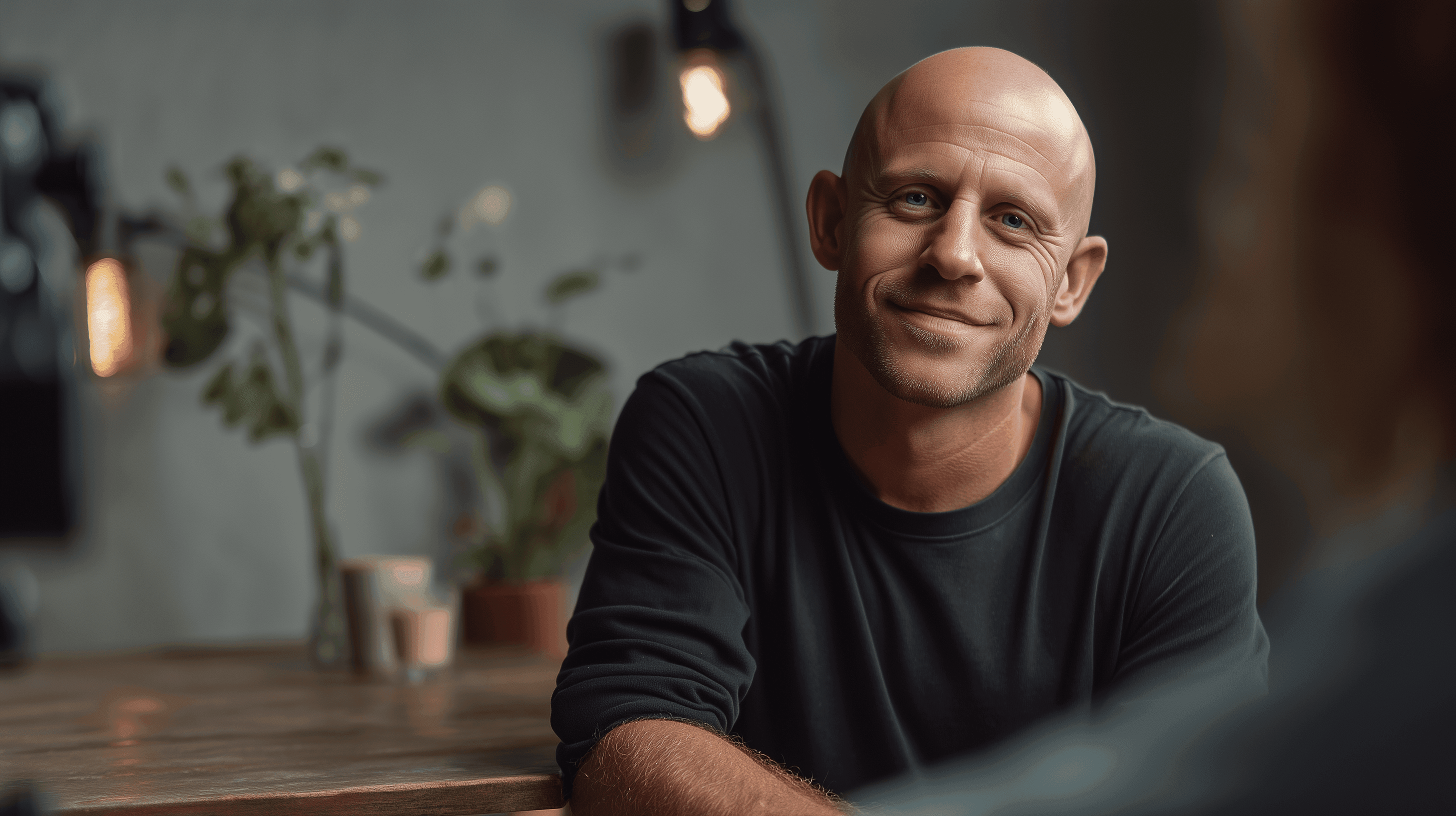
Interview
Tom Harris
Tom Harris, a licensed clinical social worker and consultant on clinician well-being, discusses compassion fatigue, vicarious trauma, and the organizational factors that drive burnout in behavioral health — along with practical strategies for sustainable practice.
Chapters
Intro – Meet Tom Harris
Compassion Fatigue vs. Burnout: A Critical Distinction
Vicarious Trauma: When Your Clients' Stories Stay with You
Organizational Factors: Caseload, Culture, and Systemic Stress
The Myth of Self-Care as a Solo Fix
Building a Sustainable Practice: Boundaries and Caseload Mix
Peer Consultation and Clinical Supervision
When It's Time to Step Back: Recognizing Your Own Limits
Audience Q&A: Rapid-Fire Questions
Outro – Signing Off
Transcript
Dr. Sloan Bruan Lorenzini
Welcome back to the program. I'm joined today by Tom Harris, licensed clinical social worker and consultant on clinician well-being. Tom, thanks for being here.
Tom Harris
Thanks for having me, Sarah. This topic is one I've been immersed in for the better part of two decades, and I think the conversation around clinician sustainability has never been more urgent.
Dr. Sloan Bruan Lorenzini
Absolutely. For our audience, Tom has worked with behavioral health organizations across the country on compassion fatigue prevention and clinician retention. We have a lot of ground to cover today.
Tom Harris
We really do. And I want to say upfront that if you're a clinician listening to this and you're feeling worn down, you're not alone. The research bears that out, and more importantly, there are concrete things we can do about it.
Dr. Sloan Bruan Lorenzini
Let's start with terminology, because I think people use "compassion fatigue" and "burnout" interchangeably, and they're really not the same thing. Can you tease that apart for us?
Tom Harris
Great place to begin. Burnout is fundamentally an occupational phenomenon. It's the exhaustion, the cynicism, the reduced efficacy that come from sustained workplace demands outstripping your resources. It can happen to anyone in any profession. Compassion fatigue is specific to helpers. It's the gradual erosion of your capacity for empathy that results from repeated exposure to the suffering of others.
Dr. Sloan Bruan Lorenzini
So a clinician could have burnout without compassion fatigue, and vice versa?
Tom Harris
Exactly, and that distinction matters clinically. A therapist with a manageable caseload but deeply traumatic material might develop compassion fatigue without the hallmarks of burnout. Conversely, someone drowning in documentation and productivity demands might burn out without ever losing empathic capacity. In practice, though, they often co-occur, and that's when clinicians are most at risk for leaving the field entirely. Figley's original work made this distinction clear, and I think we owe it to ourselves to be precise.
Dr. Sloan Bruan Lorenzini
That's a perfect segue into vicarious trauma. How does that fit into the picture, and how is it different from compassion fatigue?
Tom Harris
Vicarious trauma is about cognitive shift. It's when repeated exposure to clients' traumatic material actually changes the way you see the world. Your assumptions about safety, trust, control, and meaning start to erode. You may find yourself locking the door twice, scanning parking lots, or suddenly unable to let your kids play outside unsupervised. Your clients' stories have rewritten your internal map.
Dr. Sloan Bruan Lorenzini
That sounds like it can be insidious, because the clinician may not even recognize the shift is happening.
Tom Harris
That's exactly right. It tends to be cumulative and often invisible until a colleague or partner points out that you've changed. I've worked with therapists who didn't realize they'd stopped going to social events or had become hypervigilant until they did a structured self-assessment. Pearlman and Saakvitne's constructivist self-development framework gives us useful language for tracking those schema disruptions over time.
Dr. Sloan Bruan Lorenzini
Is there a population of clinicians that's particularly vulnerable?
Tom Harris
Clinicians who carry heavy trauma caseloads are at highest risk, naturally. But personal trauma history is also a factor. If a therapist's own history overlaps with the material their clients bring in, the resonance can accelerate vicarious traumatization significantly. Early-career clinicians are vulnerable too, because they haven't yet developed the clinical distance and integration strategies that come with experience. And I want to be careful with that term, clinical distance, because it's not about being cold. It's about having a differentiated self that can hold someone else's pain without absorbing it.
Dr. Sloan Bruan Lorenzini
Let's zoom out to the system level. How much of clinician distress is really about organizational factors rather than individual vulnerability?
Tom Harris
I'd argue the majority of it. When I consult with agencies, the number one predictor of clinician turnover isn't the severity of the clinical material. It's caseload size, administrative burden, and whether the organizational culture treats well-being as a genuine priority or just a line in the employee handbook.
Dr. Sloan Bruan Lorenzini
Can you give us a concrete example of a systemic factor that organizations tend to overlook?
Tom Harris
Transition time between sessions. It sounds small, but clinicians who are scheduled back-to-back with no buffer have no opportunity to process, to discharge the emotional residue from one session before entering the next. Over time, that accumulation is devastating. Another one is the implicit message that productivity metrics matter more than clinical quality. When your worth is measured in billable hours rather than outcomes, it erodes professional identity. And that erosion is a direct pathway to both burnout and compassion fatigue.
Dr. Sloan Bruan Lorenzini
So when we tell clinicians to just "practice more self-care," we're missing the point?
Tom Harris
Completely missing the point. The self-care narrative, as it's typically deployed, puts the entire burden on the individual clinician. Take a bubble bath, do some yoga, journal. And look, those things aren't harmful. But telling someone to meditate while they carry a caseload of forty-five clients with no administrative support is like handing someone a thimble while their house floods. Self-care without systemic change is an incomplete intervention at best, and at worst, it's gaslighting.
Dr. Sloan Bruan Lorenzini
That's a strong statement. What should organizations be doing instead?
Tom Harris
Three things at minimum. First, right-size caseloads and build in protected time for non-billable clinical activities like consultation, documentation, and professional development. Second, create a culture where asking for help isn't stigmatized. Clinicians are trained to be the helpers, and admitting you're struggling can feel like professional failure. Leadership has to model vulnerability. Third, provide ongoing training on the neuroscience of empathic engagement so clinicians understand what's happening in their nervous systems. When you can name it, you can address it. It shifts from "something is wrong with me" to "this is a predictable occupational hazard and here's how I manage it."
Dr. Sloan Bruan Lorenzini
Let's talk about what individual clinicians can do within the constraints they have. How do you think about building a sustainable practice?
Tom Harris
Boundaries and caseload mix are the two biggest levers. Boundaries means having clear start and stop times, not checking client messages at midnight, and having genuine days off where you're not thinking about treatment plans. Caseload mix means intentionally balancing the acuity of your clients. If you specialize in complex trauma, you need cases that are lighter to offset that load.
Dr. Sloan Bruan Lorenzini
Do you find that clinicians resist the idea of diversifying their caseload? Especially those who feel called to trauma work?
Tom Harris
All the time. And I understand it, because there's a deep sense of mission that draws people to this work. But I frame it as a longevity strategy. If you burn out in five years and leave the field, the net impact of your career is far less than if you pace yourself for twenty-five. I've seen too many gifted trauma therapists flame out by their early forties because they never gave themselves permission to take on a few adjustment disorder cases or career counseling clients. It's not about abandoning your specialty. It's about protecting your capacity to keep doing it.
Dr. Sloan Bruan Lorenzini
Where does peer consultation fit into all of this?
Tom Harris
It's indispensable. And I mean genuine peer consultation, not just case staffing where you're presenting clinical material for diagnostic input. I'm talking about spaces where clinicians can say, "This case is getting under my skin and I need to talk about why." That kind of reflective practice with trusted colleagues is one of the most protective factors in the literature.
Dr. Sloan Bruan Lorenzini
How does that differ from clinical supervision, particularly for early-career clinicians?
Tom Harris
Supervision has an evaluative component that peer consultation doesn't, so the psychological safety is different. In supervision, there can be a reluctance to be fully transparent because the supervisor is also assessing your competence. That said, good supervision absolutely should include space for the supervisee's emotional responses to the work. If supervision is only about treatment planning and diagnostic formulation, it's missing half the picture. I always tell supervisors: ask your supervisees what they're carrying, not just what they're doing. And for peer consultation groups, the gold standard is a structured format with agreements around confidentiality, non-judgment, and rotating facilitation.
Dr. Sloan Bruan Lorenzini
Let's address the hardest question. How does a clinician know when it's time to step back, reduce their caseload, or even take a leave?
Tom Harris
There are some clear markers. When you start dreading sessions with clients you used to feel engaged with. When your sleep is disrupted by intrusive images from clinical material. When you notice you're emotionally numb, not just with clients, but with family and friends. When your clinical judgment starts to feel impaired and you're second-guessing decisions you'd normally make with confidence. Any of those signals warrant immediate attention.
Dr. Sloan Bruan Lorenzini
And is there still stigma around a clinician saying, "I need to step back"?
Tom Harris
Enormous stigma. We're in a field that valorizes selflessness and endurance. The clinician who works through their own distress is often seen as dedicated rather than impaired. We need to fundamentally reframe this. Stepping back when you recognize your limits isn't weakness. It's an ethical obligation. The ACA, NASW, and APA codes all speak to practicing within the boundaries of your competence, and that includes emotional competence. If your capacity is compromised, continuing to see clients isn't heroic. It's a potential harm issue. I know that sounds blunt, but I think we need bluntness on this.
Dr. Sloan Bruan Lorenzini
I appreciate the directness. We have a few minutes for some rapid-fire questions from the audience. First one: what's the single most protective daily habit for a clinician?
Tom Harris
A genuine transition ritual between your last session and the rest of your evening. A walk, a specific song, changing your clothes. Something that signals to your nervous system that the clinical day is over.
Dr. Sloan Bruan Lorenzini
Best book on this topic for a new clinician?
Tom Harris
Trauma Stewardship by Laura van Dernoot Lipsky. It's compassionate, practical, and honest about the cost of caring work without being defeatist.
Dr. Sloan Bruan Lorenzini
Biggest misconception about compassion fatigue?
Tom Harris
That it means you've failed or that you're not cut out for this work. Compassion fatigue is actually evidence that your empathic system is functioning. It means you connected. The question isn't how to avoid it entirely. It's how to recognize it early and respond effectively.
Dr. Sloan Bruan Lorenzini
Tom, this has been a genuinely valuable conversation. Thank you for your expertise and your candor.
Tom Harris
Thank you, Sarah. And to everyone listening, please take this work seriously, not just for your clients' sake, but for your own. You deserve to sustain in this field.